
The compound economy
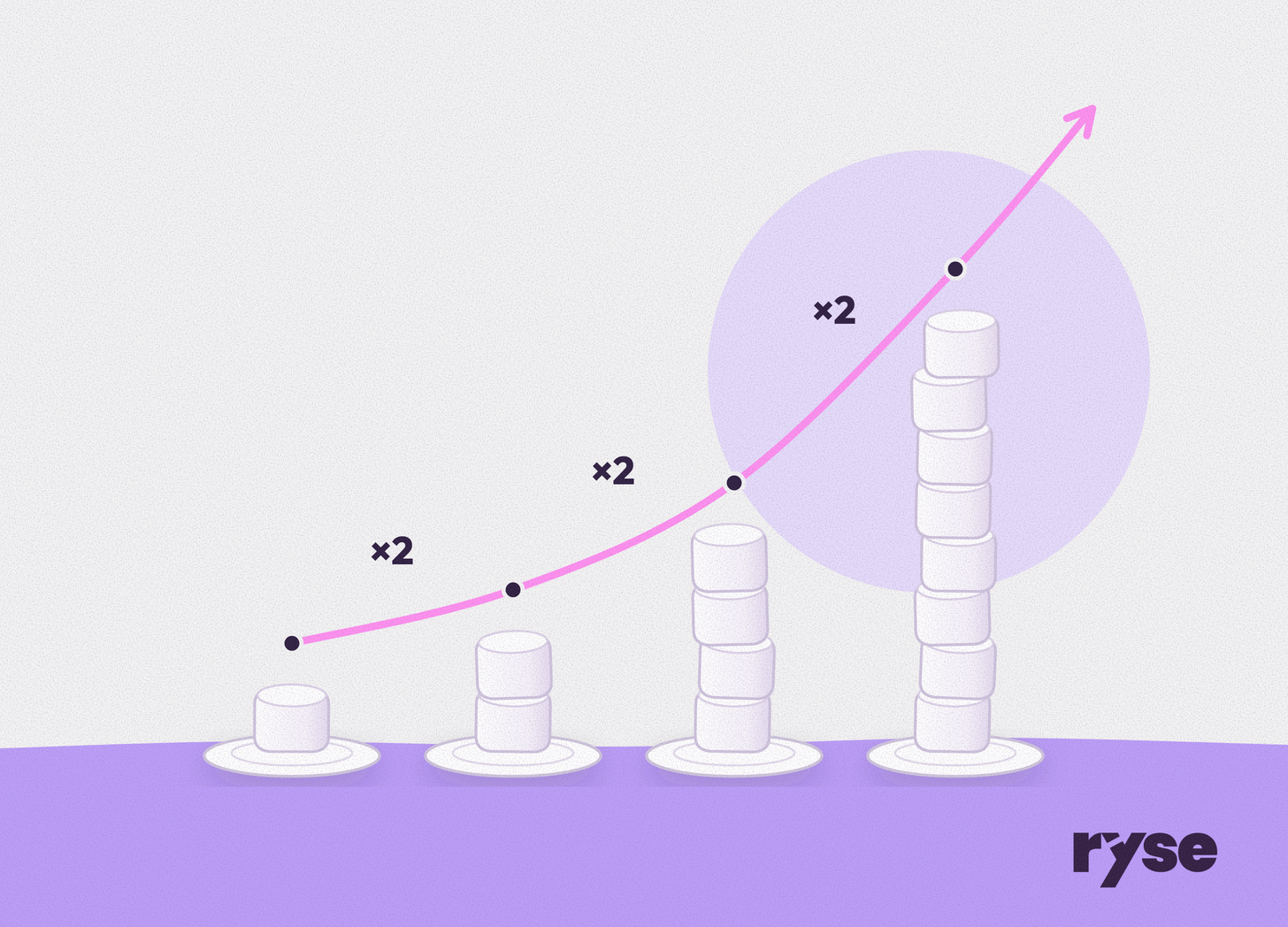
Are you familiar with the marshmallow test? It was developed by Stanford psychologist Walter Mischel around 1970 as a way to spot future psychopaths explore willpower, self-control and how we weigh long-term benefits. In short, a four- or five-year-old was sat in front of a marshmallow and given a choice: eat it now, or wait 15 minutes for the researcher to come back and get a second one. The kids who waited, who understood that the reward would compound, went on to have better, more successful lives. (Mostly. More on that later.)
Well, it turns out this is increasingly how consumers weigh up what to buy. They’re putting their money into things that compound over time – be it health, wealth or pleasure:
The supermarket goes functional. The functional food and drink market is valued at north of $300bn and is the reason your cereal is enriched with protein, your soda helps you poop better and your gummies increase your focus.
The wardrobe is a portfolio. 60% of American shoppers now weigh resale value when buying new clothes, and 39% would buy something precisely because it’ll resell.
The holiday becomes a retreat. International wellness travellers spend 38% more per trip than the average tourist; domestic ones 137% more, with more than 90% of luxury travellers look for wellness programmes when booking.
The money increasingly gets invested. Gen Z started investing at 19, sixteen years earlier than boomers. Britons paid into a record 16.8 million ISAs in 2024-25. In Japan, young people who scrimp on food and fun to fund tax-free investment accounts are called “NISA poor“.
The tech is increasingly a coach. Paying members of Oura – the smart fitness ring – doubled in 2025 and again in 2026, to 5m; with revenue up 74% in 2025 and – crucially – a third of new buyers had never owned a wearable.
The gym is the new pub. A record 81 million Americans belong to a gym, with 18 to 24-year-olds the likeliest members. London now has more 24-hour gyms than nightclubs with late licences.
And the pub isn’t the new anything. Just 54% of Americans say they drink, the lowest since Gallup started asking in 1939. Alcohol-free beer grew 8% last year while alcohol overall shrank, globally.
Every purchase is now an investment.
The question at the till used to be “will I enjoy this?” Now it’s “what’s the return?”. Ask Americans what they’d cut to save money, and dinners out, holidays and entertainment all get the chop before the gym.
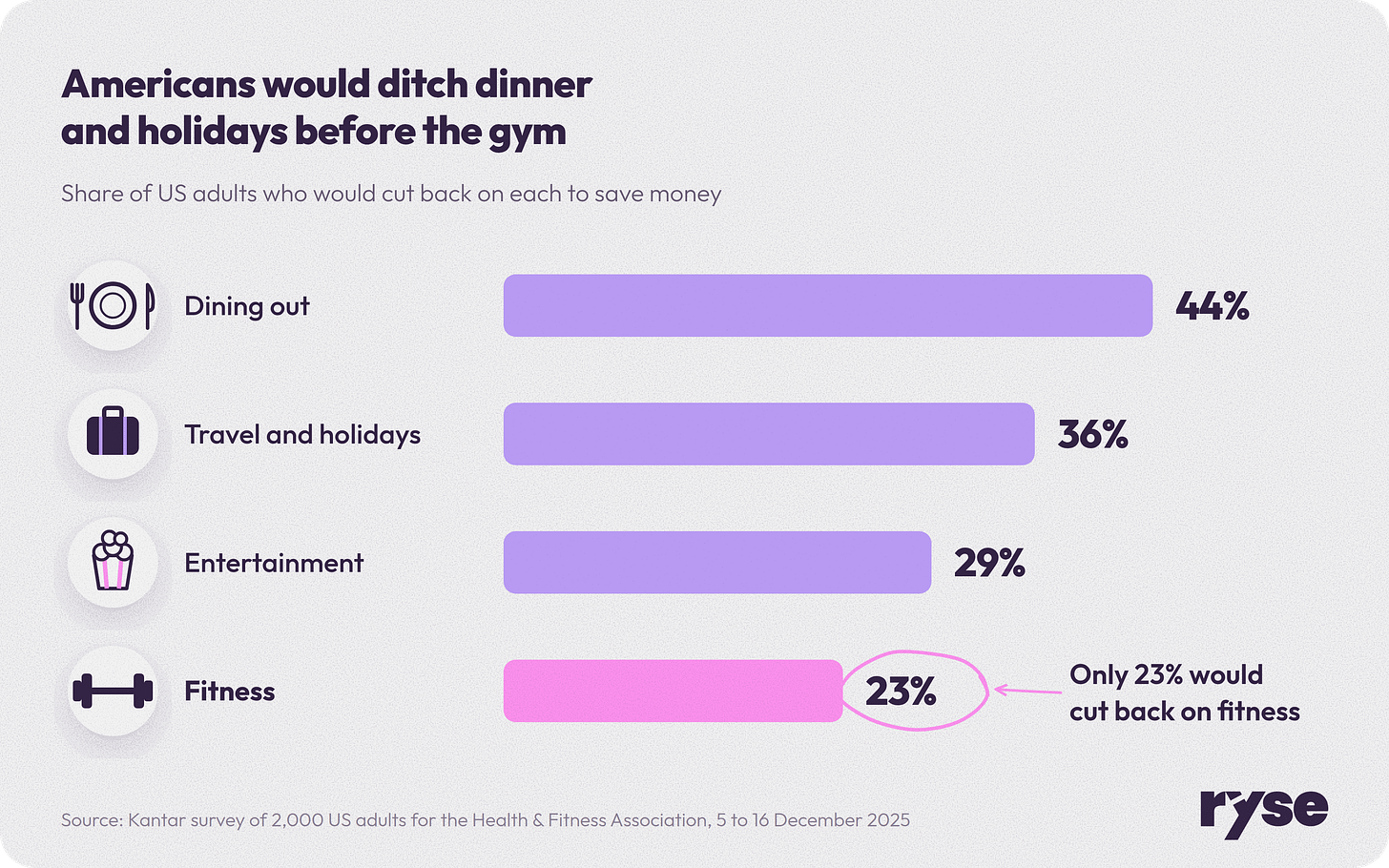
The experience economy has evolved
None of this means the experience economy is dead. Tourism and live music both set records in 2025. But experiences increasingly have to pay you back: wellness tourism has grown more than three times as fast as tourism overall since 2019. The beach holiday is quietly turning into a yoga retreat, and the club night is losing to the run club.
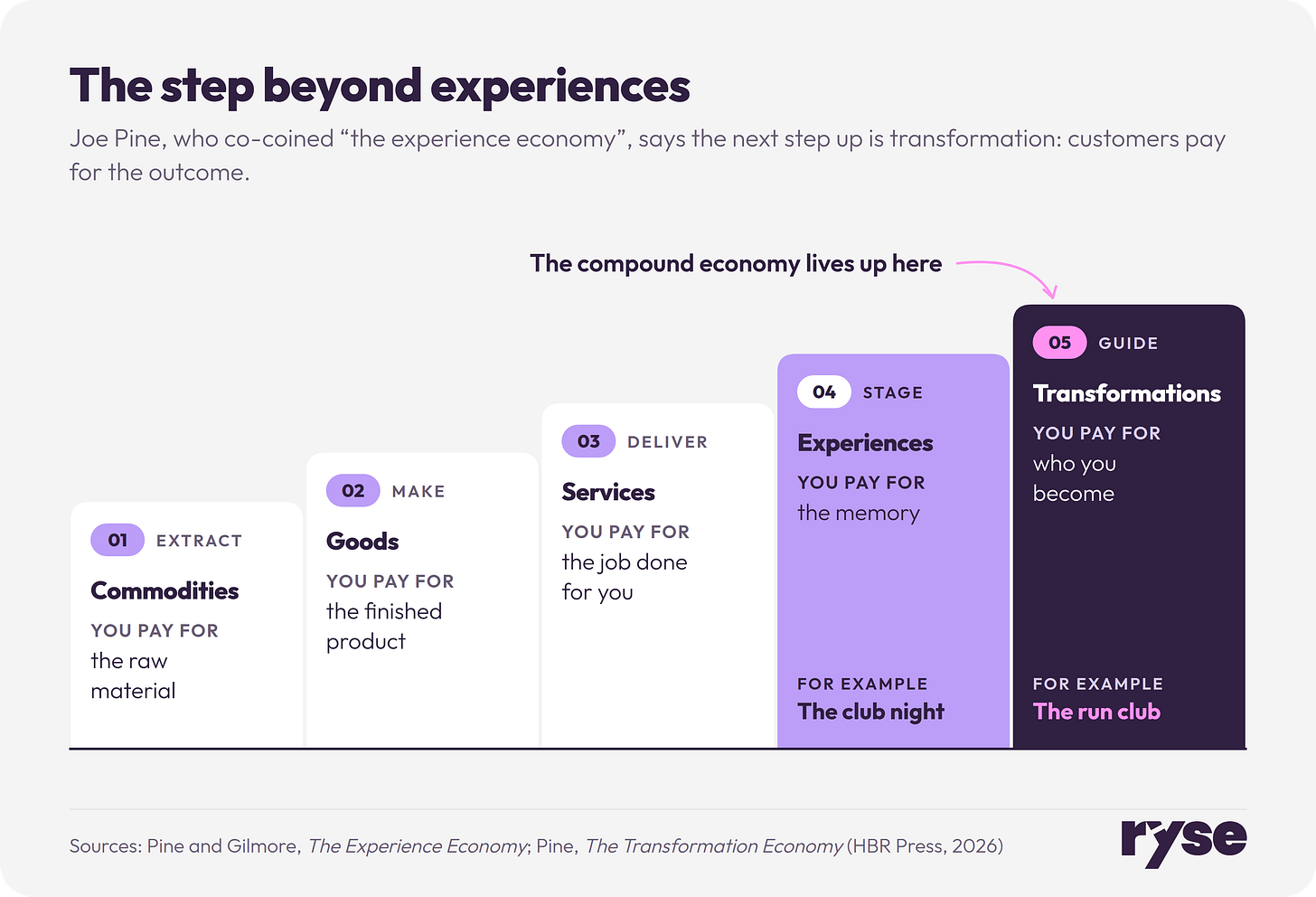
Indeed, Joe Pine, who co-coined “the experience economy” (HBR), has noted this macro trend with his book – released in February of this year – which argues for the Transformation Economy. Pine proposes that the step beyond experiences is transformation, the highest form of economic value, where companies are paid to help customers become who they want to be and are judged on the outcome rather than the product.
So what?
Three thoughts you could try applying:
1. Sell the second marshmallow. People are buying the return, so sell them the return. A latte is a treat; a latte with 15g of protein has a business case.
2. Make the experience compound. People actively want to trade on the idea that the more they put in, the more they get out. Buying a beer is good for an evening’s fun; buying a share in the beer company is good for a round-the-world-cruise in retirement.
3. Build a narrative to connect input with output. People want to track their journey and see the gains. Hyrox is a gym session with a finish line and a medal.
A footnote on the marshmallows
In 2018, researchers reran the test with 918 children from all walks of life. The link between waiting and teenage achievement was half as strong, and shrank by two-thirds once family background was accounted for.
A separate study found children waited four times longer if the adult had kept an earlier promise. Patience is easier when you trust the second marshmallow will actually turn up.
So perhaps what we can say is that the people most able to invest in their future selves are the ones who already trust their future. So, the compound economy is steepest where the money is ($40,000 longevity memberships at Equinox, anyone?!).
Either way, the compound economy is here to stay. Consumers are actively seeking and preferring products, services and experiences that pay back over a longer term – that get them to that second marshmallow. The businesses and brands that understand this have an advantage.
Right, I’m off to light a campfire…!