Last weekend, around 11.2 million pairs of eyeballs tuned in to watch the finale of the Celebrity Traitors’ second series. The show explores the hypothesis that an informed minority can outsmart and overcome an uninformed majority. The rules are simple: 3 contestants out of 22 are selected to be ‘Traitors’, anonymous to all but each other. The ‘Faithfuls’ are tasked with correctly voting out each of the Traitors through nightly round table discussions, while the Traitors murder a Faithful each night. More often than not, the hypothesis is validated by the outcome of the show across regions in which it has been played, with 59% of games having been won by the Traitors to date.
On paper, the Faithfuls should win. They far outnumber the Traitors and often have the clues to uncover their treacherous counterparts. Take away the cloaks, castle and despicable spelling of names, and the game is essentially an exercise in decision-making, dictated by who, at the round table, tells the most convincing story. Poor decision-making processes produce undesirable outcomes for Faithfuls inside the game, just as they do for organisations in business. I think this means we can learn a few things from it.
1. Loyalty can limit the likelihood of success
Faithfuls are often blinded by the relationships they develop with other players. In the final round of UK season 2, Mollie famously changed her final vote from Harry to Jaz based on her friendship with the former. This decision led to Harry’s victory as a Traitor, despite Jaz bringing compelling (and valid) deductions to the table.
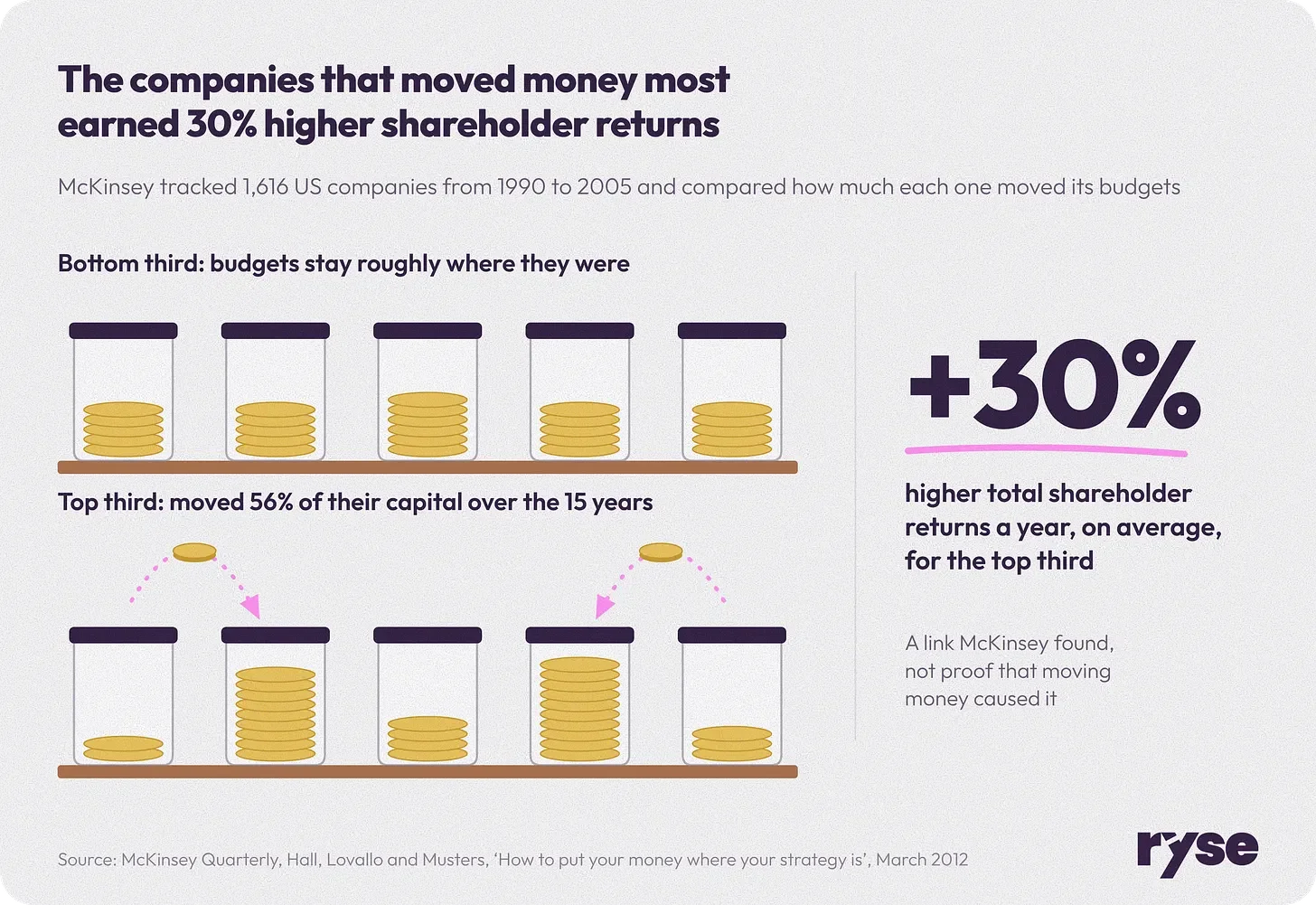
The same narrow-mindedness can lead to poor outcomes for organisations. Perhaps a brand continues to invest in its long-standing core customer segment as a trusted source of business without asking whether it’s still enabling growth. The brand’s loyalty to the segment is understandable due to its reliable, value-adding relationship with their products or services, however without assessing alternative markets, they would be endorsing the strategy somewhat visually impaired. In a 2012 study, McKinsey showed that companies that reallocated budgets the most year-on-year earned 30% higher annual shareholder returns than those that reallocated the least.
Sticking with the familiar often feels like the cautious option, but this strategy can invite as much risk as any if carried out without investigation of other routes. So, to learn from the mistake often made in The Traitors: exercise loyalty with caution, as it can leave you blind to opportunities for positive outcomes.
2. Judge behaviour, not credentials
In series 3, Jake’s case against Linda came from her behaviour. Jake swayed contestants to banish Linda after noticing her sharply turn her head to Claudia after she said the word “Traitors”. At another point in the series, Jake zeroed in on Kasim, a doctor, making the argument that his profession meant he might be “saving lives by day, killing by night”. This justification added to the case for his banishment and reveal as a Faithful later on.
Against Kasim, Jake started with a theory and found someone who fit the bill. Against Linda, Jake’s case started with something he saw and then worked out what it meant. Here, the key determinant of success was the presence of evidence-first decision-making.
Plenty of brands are making the Kasim mistake with AI search. After decades spent mastering SEO, it’s easy to assume that a strong Google search ranking means you’ll turn up when someone asks ChatGPT instead. Ahrefs studied this last year, running 15,000 queries through Google and four AI assistants: ChatGPT, Gemini, Copilot and Perplexity. They found that only 12% of the pages the assistants cited ranked in Google’s top 10 for the same query, and roughly 80% didn’t rank in Google for it at all.
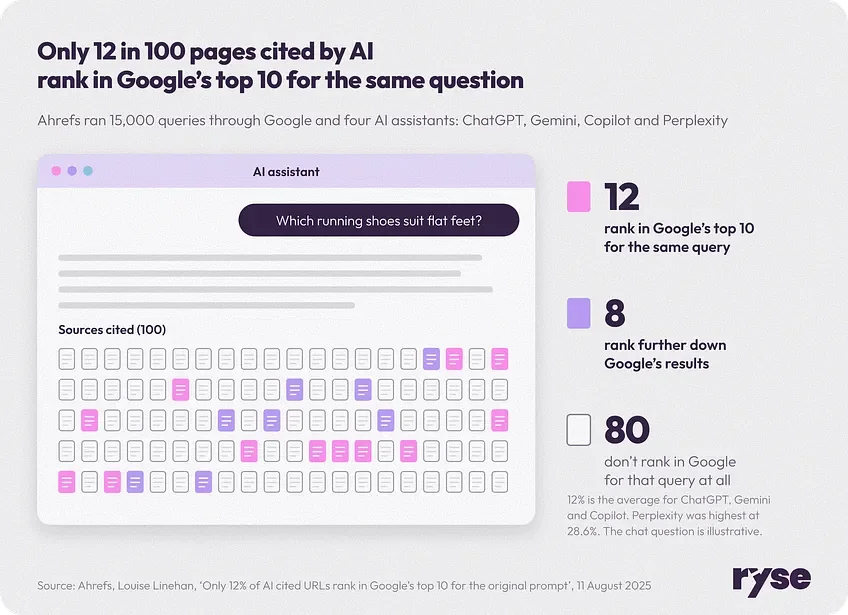
A Google ranking is a credential, but it says nothing about how a brand shows up when people ask AI. Brands that decide where to invest based on that credential are making Jake’s leap from “doctor” to “Traitor”, starting with a theory and never checking it. Those that look at what AI platforms actually say about them and decide from there are playing Jake’s Linda game.
3. Being right isn’t enough
Faithfuls who correctly identify Traitors are often overruled. Research by Robin Kramer at the University of Lincoln found that across the first three UK series, Faithfuls cast around 70 votes for players who really were Traitors, at round tables where the group banished someone else. The right answer was on the table.
Each contestant plays the game their own way, with their own qualifiers and disqualifiers for what they think makes a Traitor or Faithful. Players’ qualifiers often miss the truth, and they agree with each other even less. This means one player’s irrefutable evidence might be viewed by another as just a stab in the dark, or worse- evidence of that player’s treachery. Therefore, when a Faithful does correctly suss out a Traitor, it often has little to no effect on their chance of victory because their argument doesn’t appeal enough to the priorities or rules that other contestants have.
Contestants tend to be very cautious about sharing their theories on what qualifies as Traitor behaviour. In organisational decision-making, however, there aren’t usually stakeholders actively trying to murder you. Usually. When presenting solutions to clients or senior stakeholders, it’s important to understand what their qualifiers for success are in as much detail as possible. This avoids a well-built plan falling on deaf ears and the waste of time preparing that comes with it.
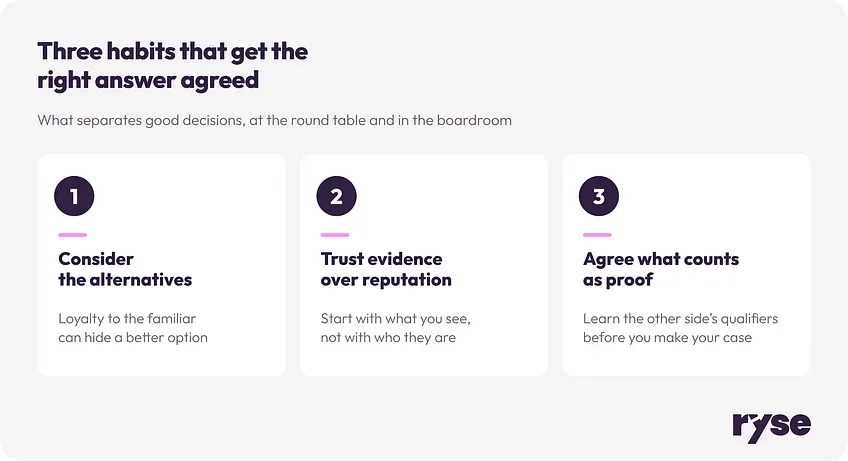
The Traitors shows us how teams with varying personalities, perspectives, and roles can fail to make good decisions, even with the answer on the table. Considering alternatives, trusting evidence over reputation, and aligning on priorities are clear indicators of successful decision-making processes within and outside of the game. At Ryse, we diagnose, map scenarios, and help teams agree the KPIs that matter, so the right answer is also the one that gets agreed. More importantly, though, we do all of that without anyone getting murdered…