
CASE STUDY
Aligning a global luxury brand's leaders on one strategy to 2030.
The leaders of a global luxury brand had big ambitions and a number of ideas, but no single framework for deciding what mattered most, how to measure it or what to launch first.
Through a series of workshops with the executive committee, the board and investors, we built a whole-business strategy framework using VMOSA: vision, mission, objectives, strategy and actions. It gave the business three master objectives, five strategy pillars, a metrics model that runs from the boardroom to every team and a sequenced roadmap of growth programmes to 2030.
AT A GLANCE
The results
business value ambition for 2030, agreed by the exec, board and investors.
of revenue to come from new business lines by 2030, more than double today's share.
growth programmes prioritised and sequenced to 2030, with an exec owner and KPIs for every pillar.
oUR APPROACH
What we did
Mapped the futures worth building
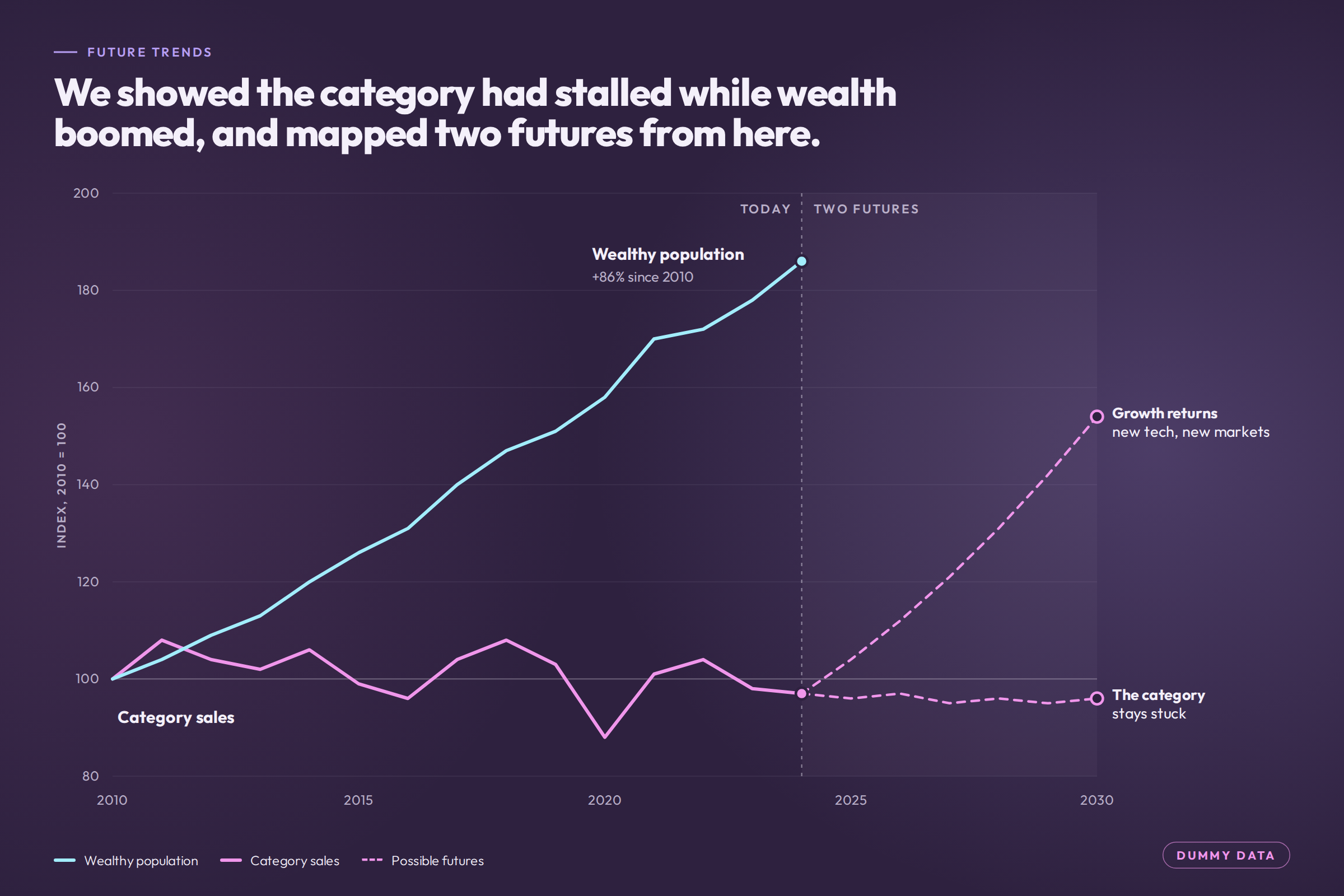
We studied 15 years of market history and the trends shaping the next decade, and set out two plausible futures: one where the category stays stuck, and one where new technology and new markets reopen growth.
Sharpened the vision and mission
We tested them in workshops with the exec and board, benchmarked them against some of the world's best-known brands and made them active and outward-facing.
Locked three master objectives
We built three master business objectives that were relevent across the company, and had buy in from across the Exec. Then we mapped how each one feeds the others.
Built five strategy pillars
Partner relationships, core audiences, product evolution, brand partnerships and net-new audiences, each with its own objectives, goals, strategies and measures, and an executive owner.
Set power and performance metrics
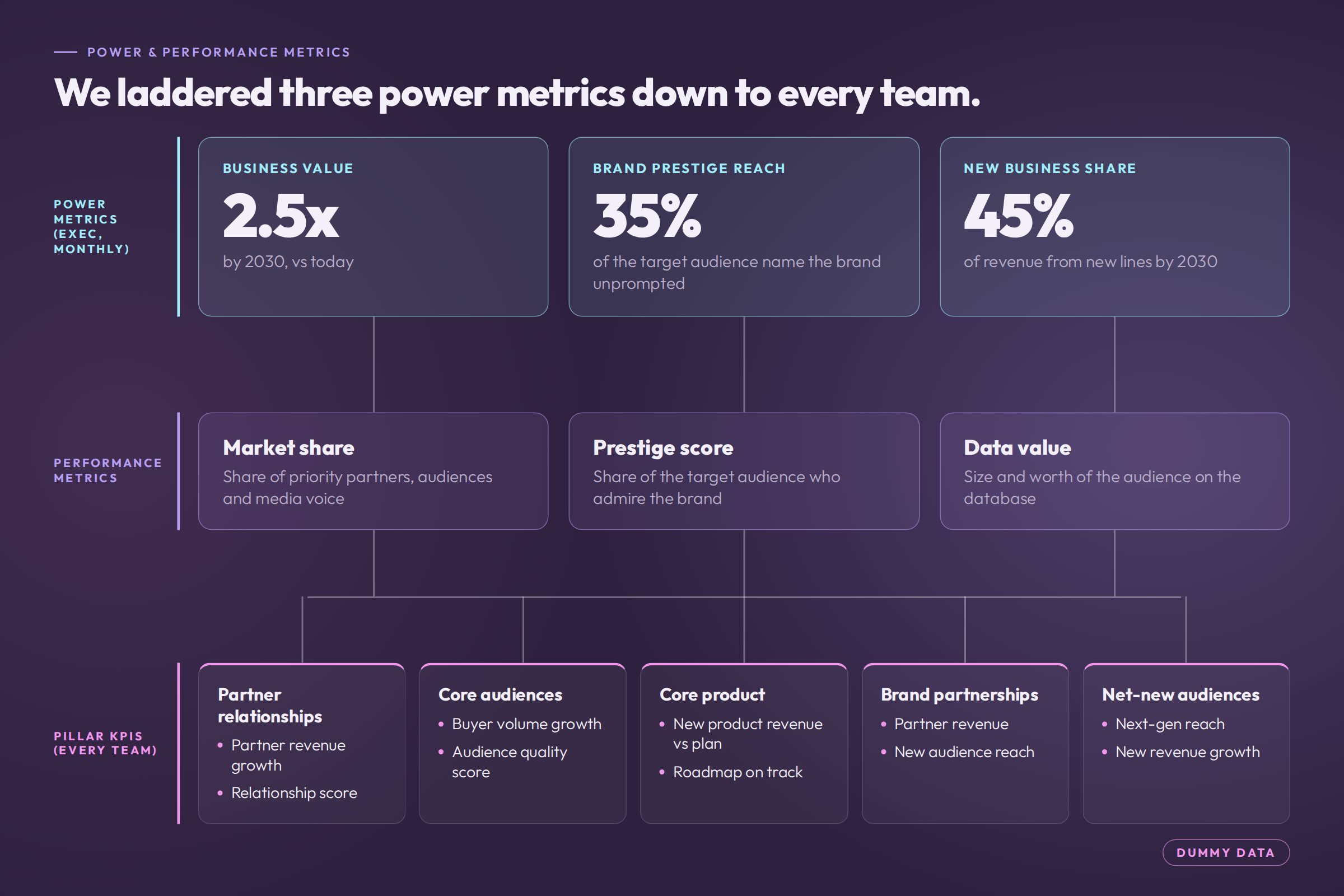
Three power metrics for the exec to track every month, cascading into performance metrics and pillar KPIs so every team works towards the same numbers.
Prioritised and sequenced the programmes
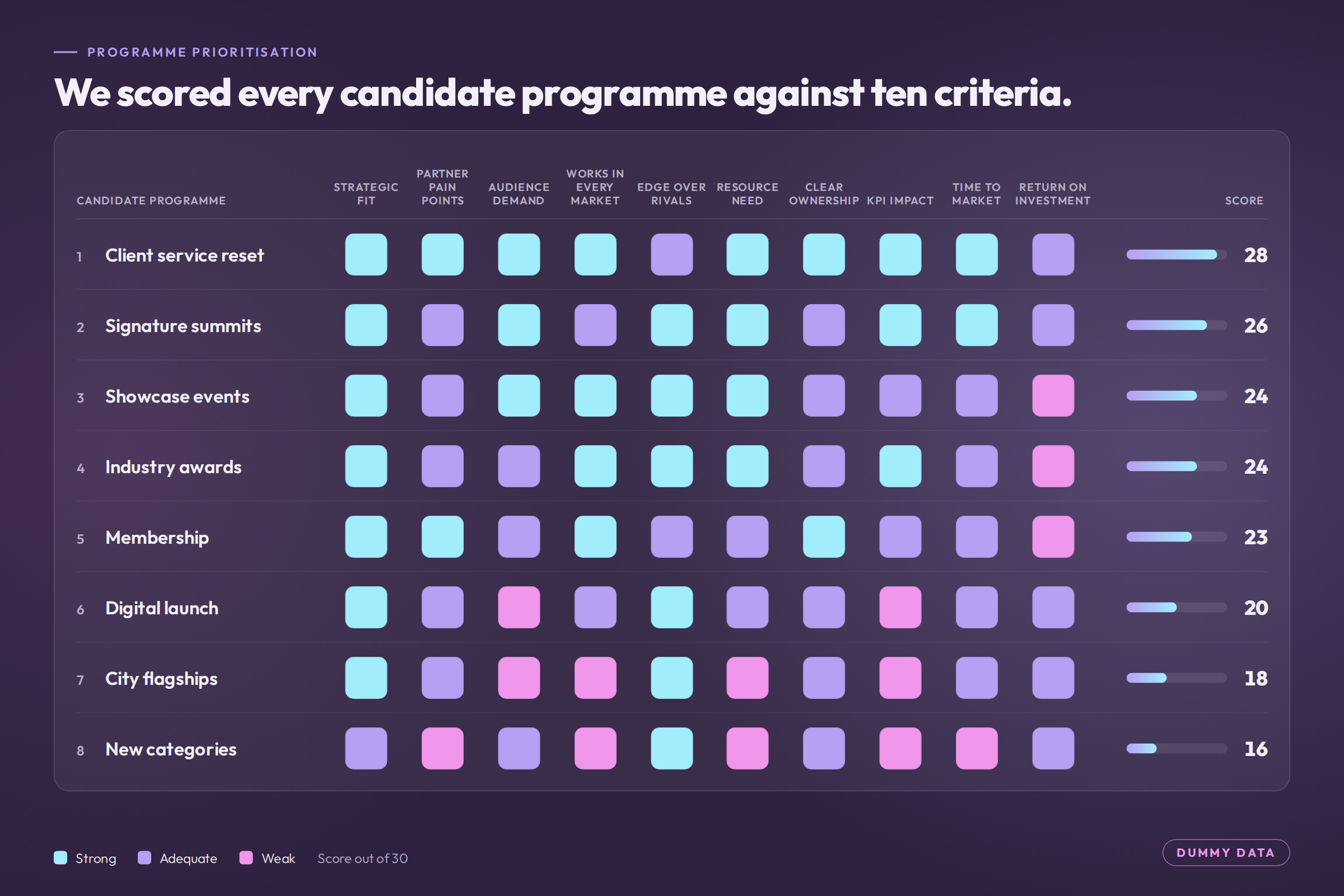
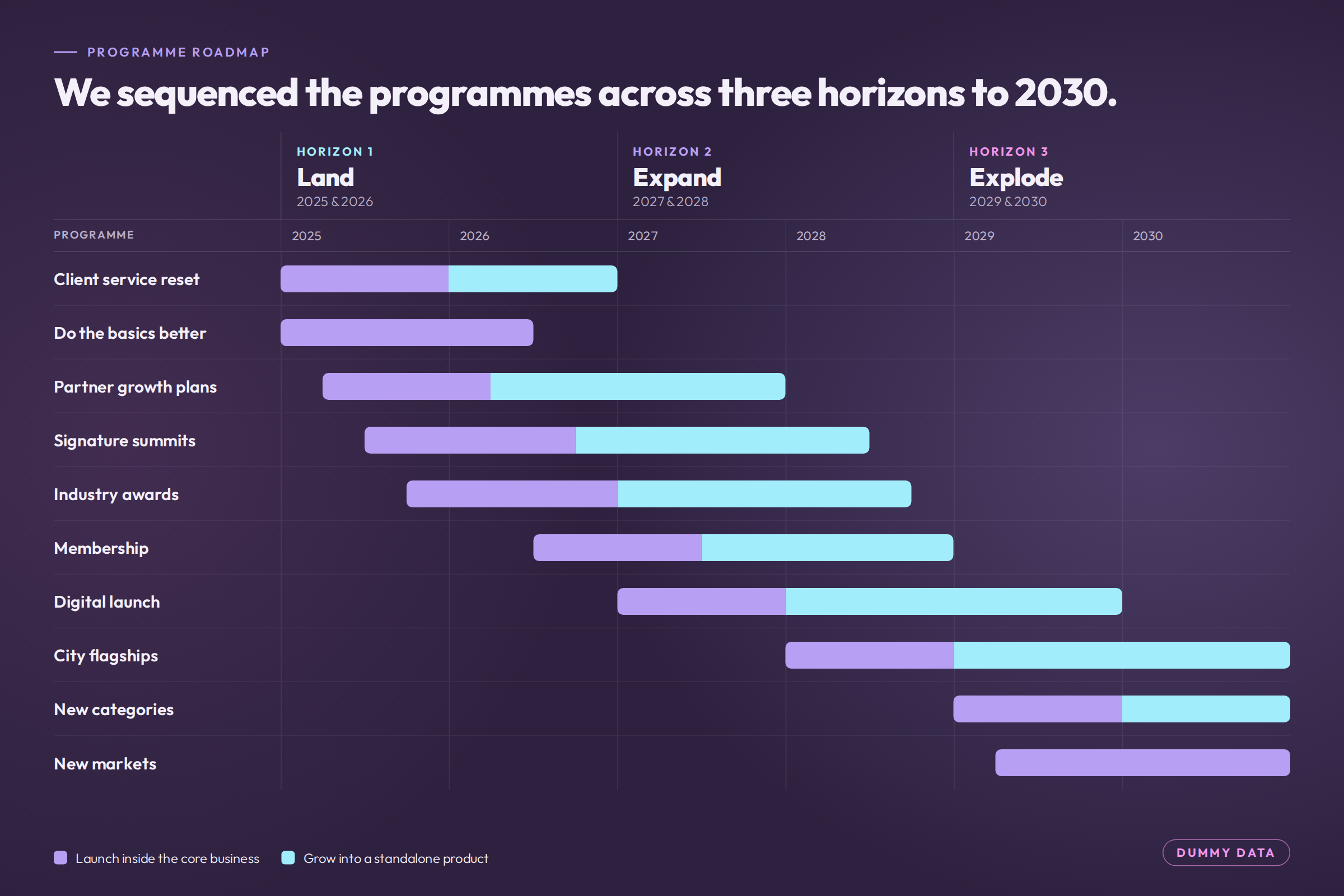
We scored candidate programmes against ten criteria, mapped them across three horizons (land, expand, explode) and matched them to the revenue targets in the medium-term plan.
THE OUTCOME
From ambition to outcome
A vision to act on
An active vision and mission the leadership could rally behind, plus two clear routes to an outward-facing brand line.
Objectives that power each other
Three master objectives mapped as a flywheel, showing how new audiences, richer data and partner revenue keep feeding one another.
One set of numbers, top to bottom
Power metrics for the exec that cascade into performance metrics and team KPIs, replacing a sprawl of disconnected measures.
An owner for every pillar
Each of the five pillars has an executive owner and its own objectives, goals, strategies and measures, so accountability is built in.
A roadmap in three horizons
Programmes sequenced from 2025 to 2030, launching inside the core business first, then growing into standalone products.
Programmes matched to revenue gaps
Each revenue line in the medium-term plan matched to the programmes that can close its gap, from premium client services to new partnerships.
Ready when you are