
CASE STUDY
Defining what good looks like for a global professional services firm website.
A global professional services firm's UK website had become a home for everything. Partners saw it as a place to publish, the digital team was fielding 70 to 90 content requests a month, and around 85% of pages got fewer than 300 visits a year. Nobody could say what the site was for, or how to tell if it was working.
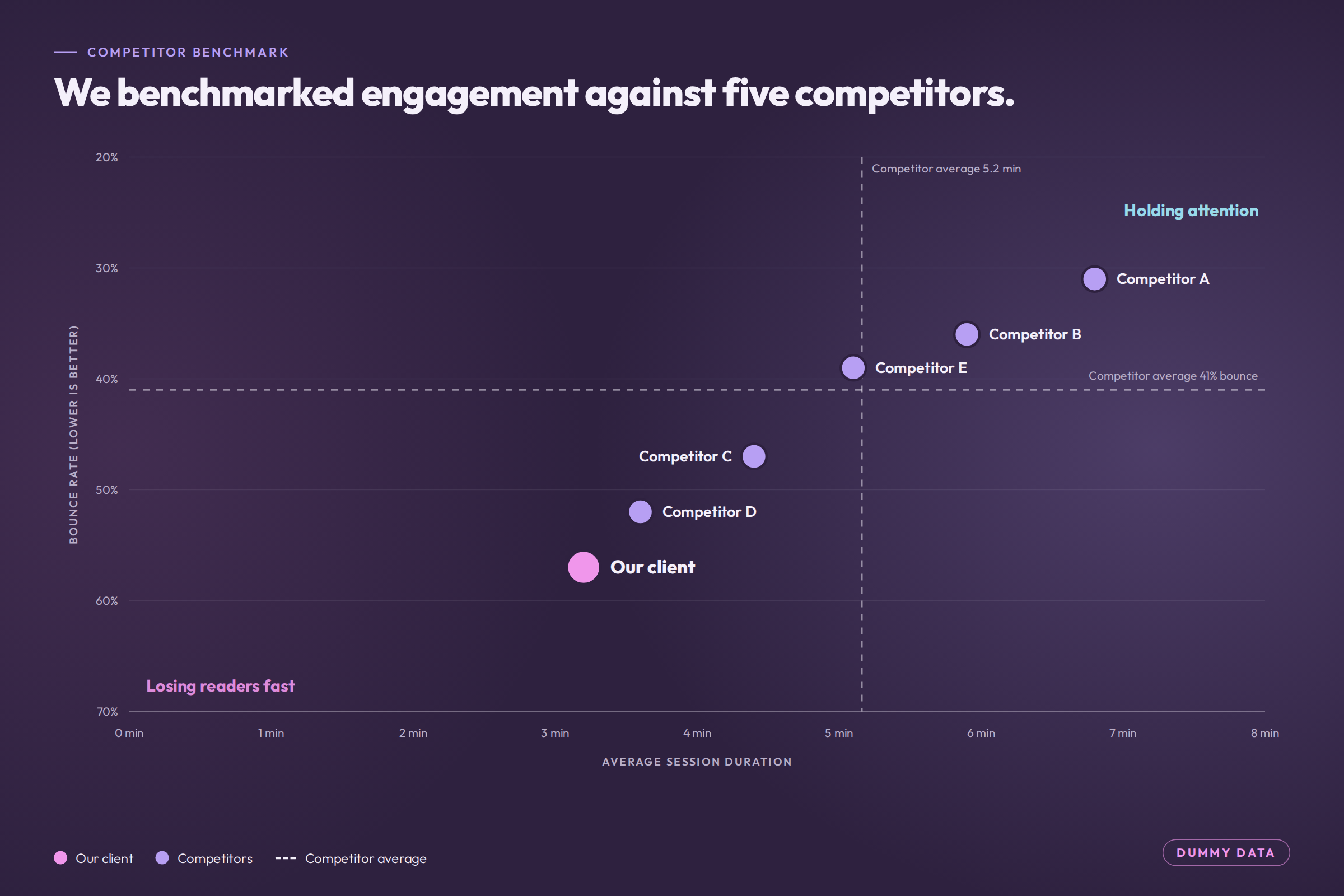
We benchmarked the site against five competitors, agreed what it needed to do at each stage of the buyer journey and measured how every type of content performed against those goals. The result was an evidence-based case for change for the firm's leaders.
AT A GLANCE
The results
of pages exposed as dead weight, so the team knew exactly where to cut back.
benchmark-beating goals that marketing, business development and partners all signed up to.
priority fixes to turn readers into client conversations, from sharper calls to action to case studies as proof.
oUR APPROACH
What we did
Benchmarked five competitors
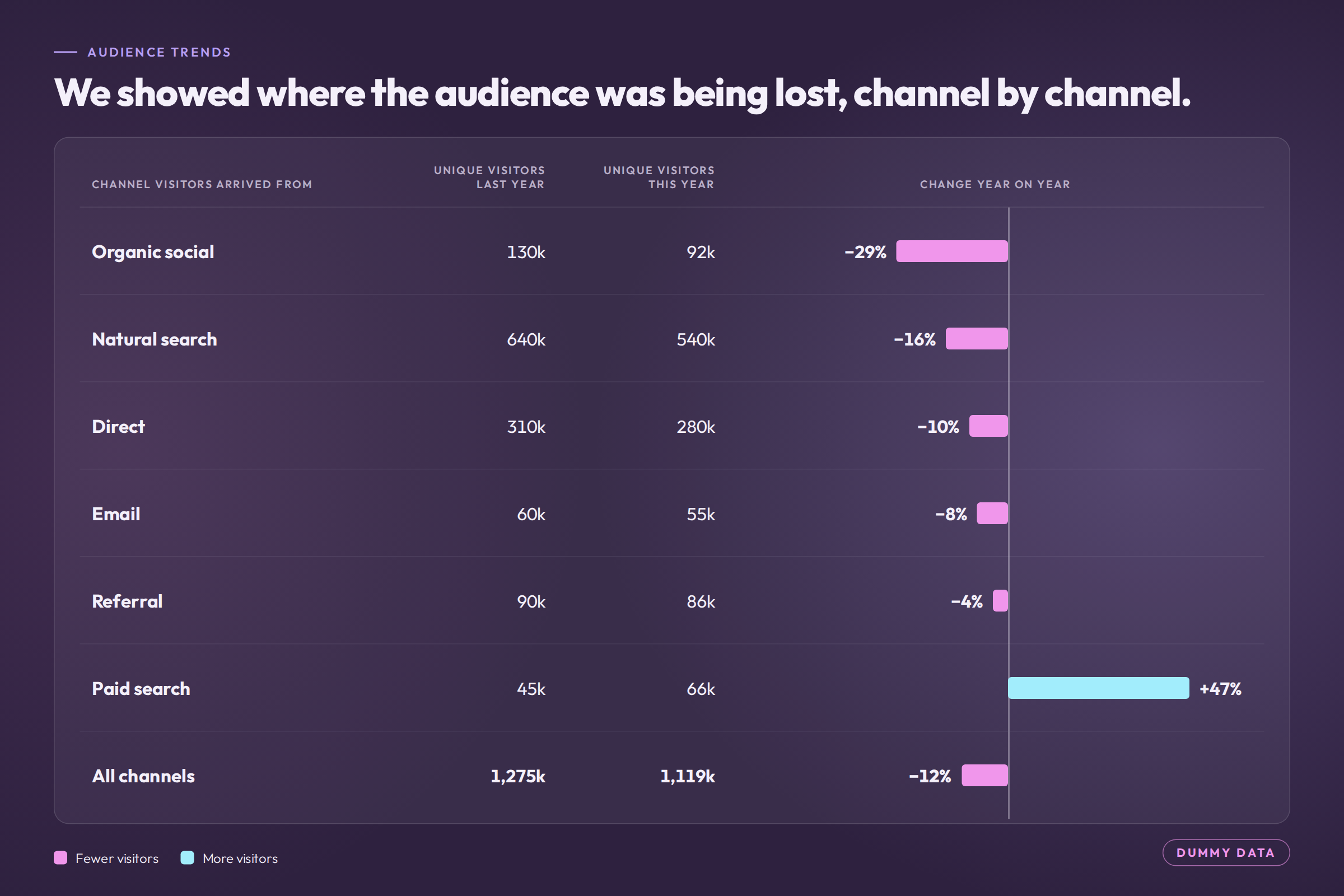
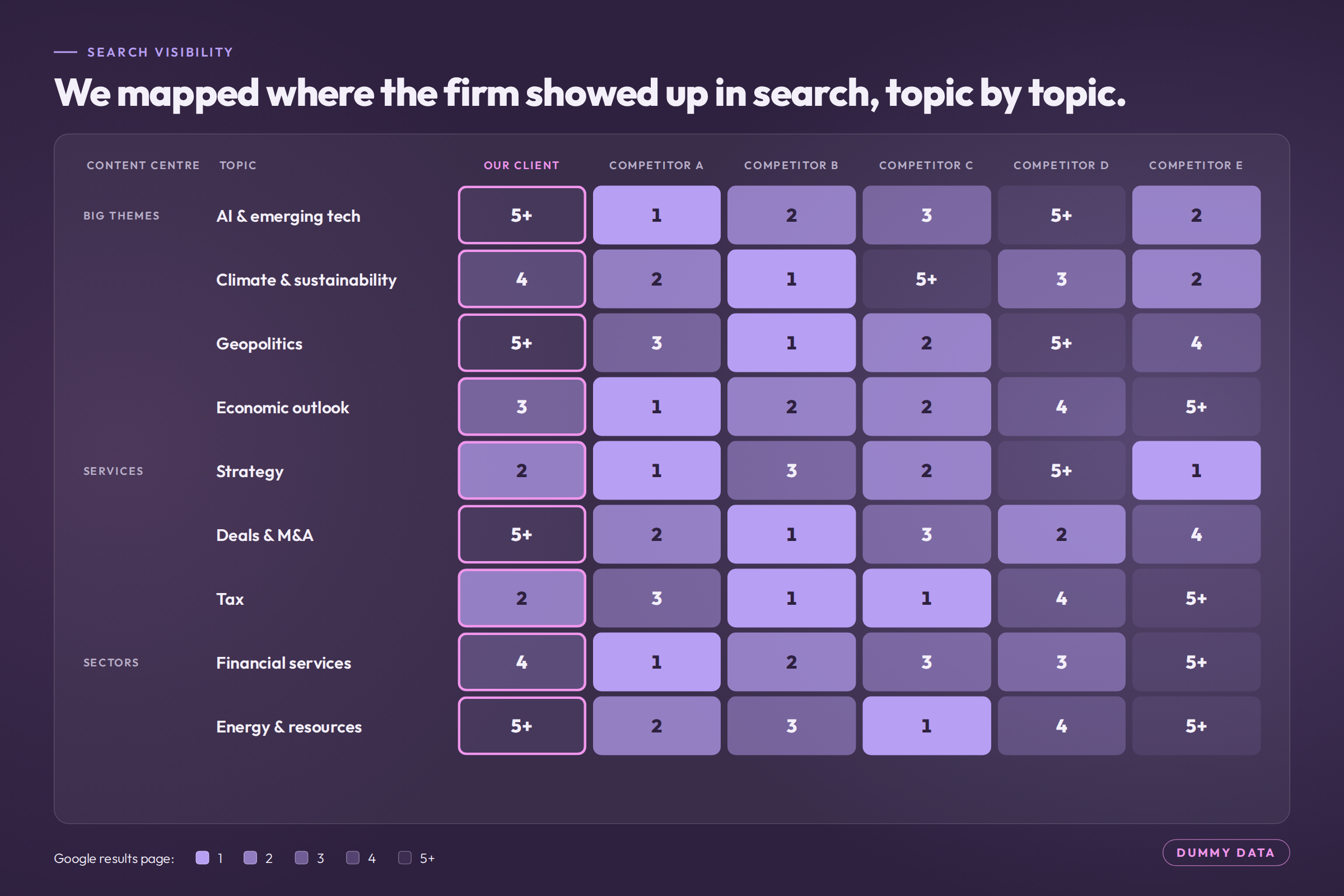
We compared audience trends, engagement and search visibility with five competing firms, and mapped which topics brought each of them their traffic.
Listened to the people who use it
Interviews with the marketing team and business development leaders on the site's role, reach and relevance, and what would help it win clients.
Agreed what the site is for
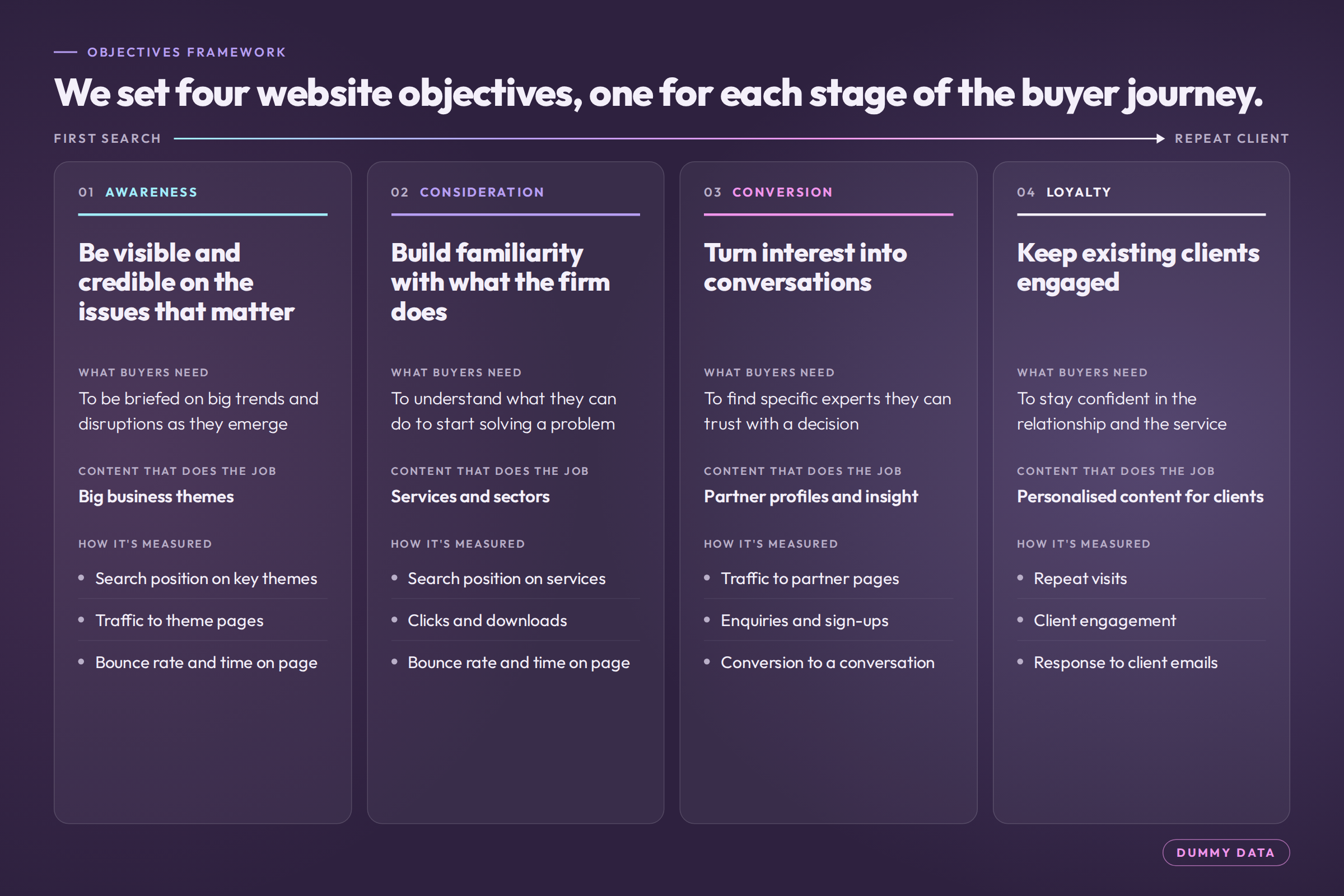
Four objectives tied to the buyer journey: be visible on the issues clients search for, build familiarity with services, turn interest into conversations and keep clients coming back.
Sorted content into four centres
Big business themes, services, sectors and partner-written insight, each mapped to the topics and search terms senior buyers actually use.
Measured every page against the goals
6,400+ pages scored on search position, visits, bounce rate, time on page and conversion, then compared with competitor benchmarks.
Built the case for change
An evidence-based leadership report with an improvement plan for each objective, and the next step mapped out: clear rules for what gets published, who owns it and how it's measured.
THE OUTCOME
From opinion to evidence
A shared definition of good
Four objectives and a KPI framework that marketing, business development and partners could all sign up to, in place of a site that tried to do everything.
Hard evidence on reach
Most traffic came from branded searches, office pages and news, while the firm barely ranked on the strategic themes its buyers search for.
Engagement gaps, by content type
Bounce rate and time on page for every content centre, set against a competitor benchmark, showing where pages lost readers fastest.
Partner content with untapped pull
Partner-written pages drew strong traffic, but most visitors left without a next step. Clear calls to action and expert profiles became a priority.
A prioritised improvement plan
Practical fixes for each objective, from SEO basics and UK-first keyword planning to faster insight, interactive tools and stronger calls to action.
A route to new website rules
The groundwork for governance that defines what the site is and isn't for, which content qualifies, who owns it and how performance is tracked.
Ready when you are